Pulse SaaS
Multi-tenant analytics SaaS with Google OAuth, YouTube + GA4 insights, automated reporting, and an operations-ready backend.
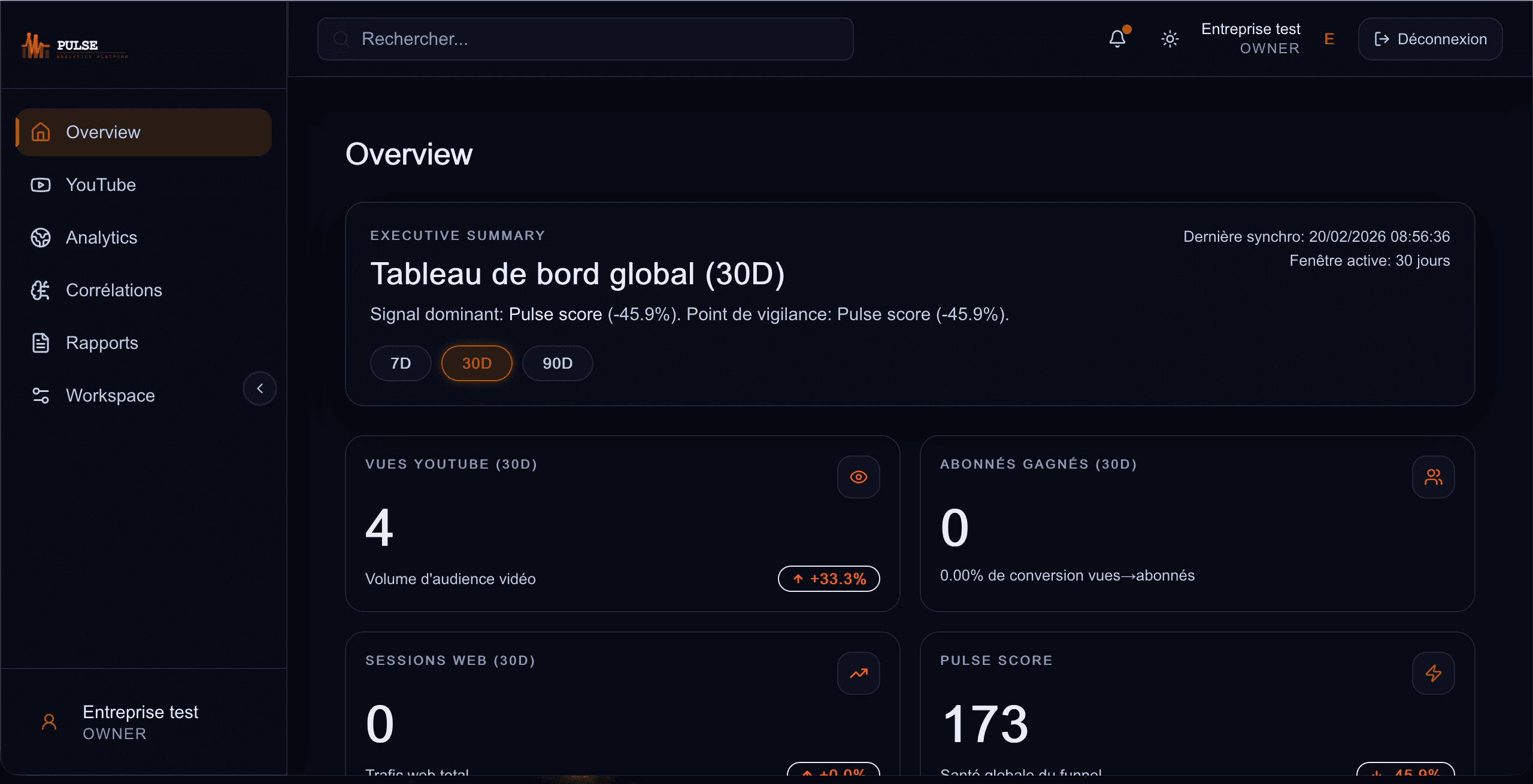
Project screenshots
1 / 12
Architecture
CoreDomain-based backend modules, shared contracts, and a clear runtime separation between frontend, API, data layer, and external providers.
Architecture diagram
Rendering architecture diagram...
Monorepo
- apps/frontend: marketing + SaaS dashboard
- apps/backend: modular NestJS API
- packages/shared: shared business types and tRPC contract surface
Runtime flow
- Browser -> Next.js frontend
- Frontend -> NestJS API via JWT httpOnly cookie
- Backend -> PostgreSQL through Prisma
- Backend -> Google APIs (OAuth, YouTube, GA4)
- Backend -> queue/cache services and PDF generation pipeline
Problem
Product and growth signals were fragmented across tools, while access control and reporting workflows were not centralized for teams.
Solution
Built a full-stack monorepo (Next.js + NestJS) with workspace RBAC, unified analytics views, correlation insights, report scheduling, and a guarded API architecture.
Result
Pulse provides one operational cockpit for analytics, reporting, and workspace collaboration, with a solid foundation for production hardening.
Engineering snapshot
V1 scope delivered
- Google OAuth login and callback with remember-me behavior
- Workspace lifecycle: create, rename, switch active workspace
- Role-based invitations and member management
- Analytics modules: overview, YouTube, GA4, correlations
- Automatic lag/correlation insight generation
- Report generation, scheduling, retries, and history
- Puppeteer PDF generation with fallback strategy
Key highlights
- Google OAuth + JWT cookie auth flow
- Multi-tenant workspace RBAC (OWNER / EDITOR / VIEWER)
- Real YouTube + GA4 data endpoints
- Weekly/monthly report scheduling with retry flows
- Ops endpoints and audit-ready structure
Security & quality
- Helmet + CSP baseline and route-level rate limiting
- httpOnly cookies with secure production setup
- Encrypted Google tokens (AES-256-GCM) with rotation support
- DTO validation and standardized API success/error envelopes
- Unit tests on core services and CI quality gates (lint, typecheck, tests, build, Lighthouse)
Current limits
- Cache and queue currently in-memory (distributed infra planned)
- Email delivery still stubbed
- Frontend/e2e test coverage remains a next step